You can change the style the forum displays by selecting your preferred style at the bottom left of the site.
We have made an enhancement so that old threads should now link from search results to the correct thread. This is not yet in place for single post links
Hi guys just a quick note there have been massive changes to the M.O.T testing this year
Take a look at the PDF file i felt quite sorry for a old boy today with his old girl thing's that were advisories were massive failures today the car has been scrapped
I had a similar situation this week with an Older couple with an old fiesta would have needed a few small things for test but with the new regulations the car has also been written off.
ooh well we must comply with the rest of europe! Load of blinking tosh.
What's next? must keep standard sized wheels, no engine mods, no life, no fun, no danger, lets all just live in a molly-coddled world of inert she -ite.....
If they are going down that road then the m.o.t will have to change to 4 and 2 it is a money making racket but hey
Yes make sure the basic's are safe but now it they are adding more and more on im sure there is more being added in june
There are to be some changes to the MOT test from 1st January 2012 which are being introduced in response to European Commission Directive 2010/48/EU of the 5th July 2010 and which will effect those with aftermarket HID headlights and remapped ECUs:
and on the function of airbag and seat belt pre-tensioner systems:
7.1.4. Safety belt Pre-tensioners:
Pre-tensioner obviously missing or not suitable with the vehicle.
7.1.5. Airbag:
(a) Airbags obviously missing or not suitable with the vehicle.
(Airbag obviously non-operative.
7.1.6. SRS Systems:
SRS MIL indicates any kind of failure of the system.
VOSA say.....
The car/light goods vehicle MOT test is about to change – the European Commission has changed the Directive that covers it. We take a look at when these changes are likely to come into effect and what they mean for MOT testers.
Britain has been testing vehicles under the MOT scheme for 50 years now. Last year, the European Directive covering the MOT test was updated and revised by a modern version called 2009/40/ EC. This was then updated by 2010/48/EU, which was ratified on 5 July this year.
The new Directive keeps the EU minimum 4-2-2 test frequency but adds a number of new elements to the British MOT test. The Directive anticipates all test changes being in place by 1 January 2012, and a common European approach to test certificates in place by 1 January 2014. So what is VOSA doing to introduce the changes?
In terms of test frequency, in mid-July the coalition government confirmed that it intends ‘to look at the issue of MOT test frequencies later this year’. VOSA contributed statistical data to inform the last review in 2008, and we expect that our computer system and the data you have entered will be utilised again in much the same way.
We expect to hear more details of the government’s review proposals later in the year.
As far as changes to the test content are concerned, VOSA has already been analysing the requirements of the new Directive and working out how to implement them. We started this earlier in the year by talking with representatives of the MOT trade at our regular Trade User Group and VTS Council meetings. Both VOSA and the Department for Transport (DfT) are keen to ensure that any changes to the test are introduced in as practical a way as possible, keeping the burden on the trade to a minimum and ideally keeping the changes cost neutral.
In many cases, the changes shouldn’t necessarily lead to an increase in average test times. A good example is the malfunction indicator lamps on the dashboard that indicate defective electronic power steering, electronic stability control and secondary restraint systems. Testers already check the dashboard for other lamps, so no extra time would be required for this addition to the test.
Electrical wiring and batteries are now included in the test’s scope, but testers already check the vehicle structure where wiring is secured – often along the same routes as other testable items, such as brake pipes in the engine compartment. So again, this doesn’t look like an additional burden on the tester. In the pre-computerisation days, testers often (wrongly) failed vehicles for insecure batteries, so they must have been looking at them then! Now, it means that when we implement the new Directive, vehicles can legitimately fail for battery insecurity, for no extra tester effort.
Other items – such as headlamp bulb and unit incompatibility, headlamp levelling devices and illegal engine ‘chipping’ – will need further thought before we can get a workable solution for MOT stations.
Some of the new items may require extra effort on the part of the tester – when we know for sure what that is we’ll be talking again with our trade and DfT colleagues to work out what the impact will be.
The common EU test certificate should be relatively easy to achieve – the only data that the Directive expects and that we don’t currently provide is the symbol for the vehicle’s country of origin. Probably 99% of vehicles tested will have
‘UK’ entered here, but if you do test vehicles with a foreign plate, you will need to enter the correct country symbol. We may even be able to make this change earlier if there is a convenient opportunity.
The MOT trade can rest assured that VOSA is working closely with you to introduce any new elements as efficiently and effectively as possible, with the minimum of fuss. Just as importantly, we are also working closely with Siemens to ensure that any system changes due on New Year’s Eve 2011 go smoothly! We should know more by the time the MOT seminars take place – come along and ask the experts.
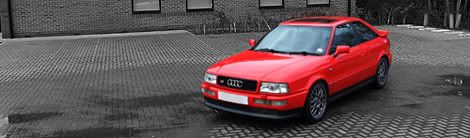
Audi S2 Coupe 1995 VW Passat GL5 (hatch) 1986 VW Passat GL 1.8 (saloon) 1986 Carrera Subway 8
Do the washer jets just have to be there or working? does it state this?
Working i have a printed out version given to the tester i am still scanning through it my argument was that some cars have HIDS and don't have washer jets i look after a couple of Audi's that have had them from the supplier but no jets im sure we will have a argument or two with M.O.T tester in July
im all for some changes some of the state iv seen some cars iv worked on like welding should never be on the road but its still work coming in at the end of the day.
its just to get us to keep buying new cars.
As for HID's, those of us who have them fitted should be ok as the s2 has headlamp washers and motorised aim adjusters which can be operated via a switch from the drivers seat.*
Theres no mention of the presence of suspension operated auto-aim levelling being a requirement.*
We process personal data about users of our site, through the use of cookies and other technologies, to deliver our services, personalize advertising, and to analyze site activity. We may share certain information about our users with our advertising and analytics partners. For additional details, refer to our Privacy Policy.
By clicking "I AGREE" below, you agree to our Privacy Policy and our personal data processing and cookie practices as described therein. You also acknowledge that this forum may be hosted outside your country and you consent to the collection, storage, and processing of your data in the country where this forum is hosted.




Comment