
There are five possibilities:
1. Transmission fluid leaking past the input shaft seal
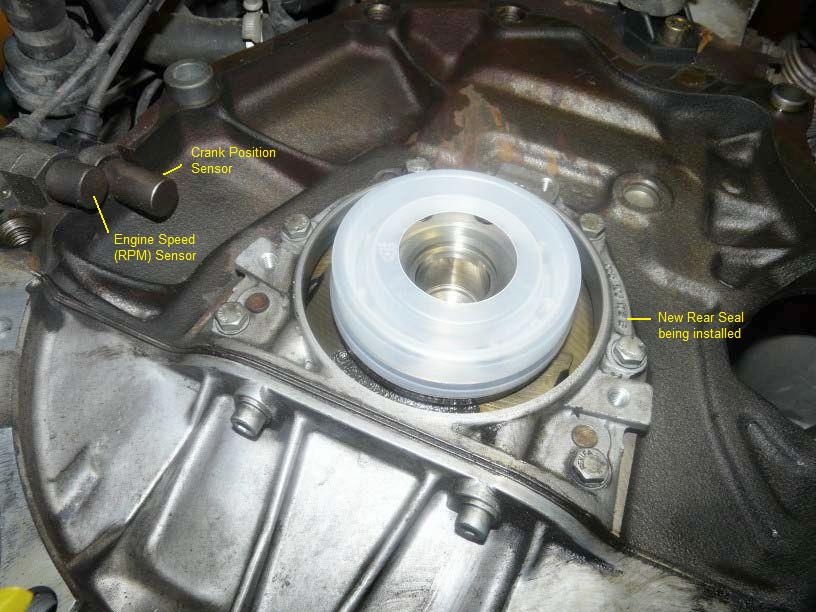
2. Engine oil passing through the rear crank seal
3. Clutch fluid (actually brake fluid) leaking past a failed slave cylinder.
4. Loose bolt machining a hole through the bellhousing and into the transmission, letting tranmission fluid into the bellhousing
5. Dual Mass Flywheel Failure, letting its grease out.
All the the following PNs refer to the S2, the UrS4/S6 and the RS2.
The transmission input shaft seal is PN 016311113B

It lives behind the Item 20 "guide sleeve" in this diagram:

And the guide sleeve is behind the Item 16 clutch operating arm:

Here is the transmission input shaft with the clutch operating arm and guide sleeve removed showing the input seal buried deep in the transmission housing, just inside the triangular boss for the guide sleeve attachment:

Here is a photo of a leaking transmission input shaft seal that leaked enough transmission fluid to cause the clutch disc to start slipping even though the clutch was relatively new.

Photo Courtesy of Juvkam78 here.
Here is the input shaft seal, as sold by ECS Tuning:

http://www.ecstuning.com/ES258771/
The Crank Seal is Item 7 "sealing flange" PN 068103171F which is both the frame holding the seal and the seal. Both the 068103171F and the separate seal 068198171 (no frame)(85 x 105 x 12mm) can be purchased separately in the aftermarket (ebay, FAP 99, etc).

Just the seal, PN 068198171, from FAP 99:

eBay sealing flange (photo courtesy of Yodafro)

And finally the Slave Cylinder, Item 30, PN 4A0721261

Here is a photo from "rxl" showing Failure Mode 3:


Brian C's slave cylinder installation TRICKS
Here are two examples of Failure Mode No.4:
Example 4-1:

Example 4-2:

Now Failure Mode 5 -Leaking DMFW:
Here is what LUK says about their DMF:
"A standard Dual Mass Flywheel consists of the primary flywheel (1) and the secondary flywheel (6). The two decoupled masses are connected via a spring/ damper system and supported by a deep groove ball bearing or plain bearing (2) so they can rotate against each other. The primary mass with starter ring gear is driven by the engine and tightly bolted to the crankshaft. It encloses, together with the primary cover (5) a cavity which forms the arc spring channel. At the heart of the spring/ damper system are the arc springs (3). They sit in guides in the arc spring channels and cost effectively fulfill the requirements of an "ideal" torsion damper. The guides ensure correct guidance of the springs during operation and the grease around the springs reduces wear between the guides, channels and the springs. Torque is transferred via the flange (4). The flange is bolted to the secondary flywheel with its wings sitting between the arc springs. The secondary flywheel helps to increase the mass moment of inertia on the gearbox side. Vents ensure better heat dissipation. As the DMFW has an integral spring/damper system, a rigid clutch disc without torsion damper is normally used."
DMFW info: http://forums.quattroworld.com/s4s6/msgs/24536.phtml


Photo courtesy of bartolomeus
1. Transmission fluid leaking past the input shaft seal
2. Engine oil passing through the rear crank seal
3. Clutch fluid (actually brake fluid) leaking past a failed slave cylinder.
4. Loose bolt machining a hole through the bellhousing and into the transmission, letting tranmission fluid into the bellhousing
5. Dual Mass Flywheel Failure, letting its grease out.
All the the following PNs refer to the S2, the UrS4/S6 and the RS2.
The transmission input shaft seal is PN 016311113B
It lives behind the Item 20 "guide sleeve" in this diagram:
And the guide sleeve is behind the Item 16 clutch operating arm:
Here is the transmission input shaft with the clutch operating arm and guide sleeve removed showing the input seal buried deep in the transmission housing, just inside the triangular boss for the guide sleeve attachment:
Here is a photo of a leaking transmission input shaft seal that leaked enough transmission fluid to cause the clutch disc to start slipping even though the clutch was relatively new.
Photo Courtesy of Juvkam78 here.
Here is the input shaft seal, as sold by ECS Tuning:
http://www.ecstuning.com/ES258771/
The Crank Seal is Item 7 "sealing flange" PN 068103171F which is both the frame holding the seal and the seal. Both the 068103171F and the separate seal 068198171 (no frame)(85 x 105 x 12mm) can be purchased separately in the aftermarket (ebay, FAP 99, etc).
Just the seal, PN 068198171, from FAP 99:
eBay sealing flange (photo courtesy of Yodafro)
And finally the Slave Cylinder, Item 30, PN 4A0721261
Here is a photo from "rxl" showing Failure Mode 3:
Brian C's slave cylinder installation TRICKS
Here are two examples of Failure Mode No.4:
Example 4-1:
Example 4-2:
Now Failure Mode 5 -Leaking DMFW:
Here is what LUK says about their DMF:
"A standard Dual Mass Flywheel consists of the primary flywheel (1) and the secondary flywheel (6). The two decoupled masses are connected via a spring/ damper system and supported by a deep groove ball bearing or plain bearing (2) so they can rotate against each other. The primary mass with starter ring gear is driven by the engine and tightly bolted to the crankshaft. It encloses, together with the primary cover (5) a cavity which forms the arc spring channel. At the heart of the spring/ damper system are the arc springs (3). They sit in guides in the arc spring channels and cost effectively fulfill the requirements of an "ideal" torsion damper. The guides ensure correct guidance of the springs during operation and the grease around the springs reduces wear between the guides, channels and the springs. Torque is transferred via the flange (4). The flange is bolted to the secondary flywheel with its wings sitting between the arc springs. The secondary flywheel helps to increase the mass moment of inertia on the gearbox side. Vents ensure better heat dissipation. As the DMFW has an integral spring/damper system, a rigid clutch disc without torsion damper is normally used."
DMFW info: http://forums.quattroworld.com/s4s6/msgs/24536.phtml
Photo courtesy of bartolomeus


 0-200km/h 9sec
 Just not a normal wear item situation.


Comment