URS6 Way Too weak!!!

Collapse
X
 
  • Time
  • Show
Clear All
new posts
  • HMS-S6
    S2Forum Extremist
    • Jan 2010
    • 1164
    • Home: United Kingdom Current: England

    #46
    Originally posted by prj
    MAF map huh what?

    Measure pressure under acceleration.
    Measure compression in all cylinders.
    I meant measure the values, which i think you knew full well!!!

    Measure pressure under acceleration? As in boost pressure with a mechanical gauge, if so then i've done that and all is the same as my 'controll' car i then scrapped and now regret!!

    Compressions when i checked after fitting the head were within 1-2 psi of eachother and all correct.

    Comment

    • prj
      S2Forum Zealot
      • Mar 2010
      • 6308
      • Country: Estonia

      #47
      Originally posted by motocrossmad
      I meant measure the values, which i think you knew full well!!!

      Measure pressure under acceleration? As in boost pressure with a mechanical gauge, if so then i've done that and all is the same as my 'controll' car i then scrapped and now regret!!

      Compressions when i checked after fitting the head were within 1-2 psi of eachother and all correct.
      I mean fuel pressure under acceleration.
      http://tuner.ee - http://www.facebook.com/tuner.ee

      Comment

      • HMS-S6
        S2Forum Extremist
        • Jan 2010
        • 1164
        • Home: United Kingdom Current: England

        #48
        Originally posted by prj
        I mean fuel pressure under acceleration.
        Done that. Ran my snap-on gauge round the bonnet on safety catch and under wiper so i could see it while driving.

        Comment

        • prj
          S2Forum Zealot
          • Mar 2010
          • 6308
          • Country: Estonia

          #49
          Originally posted by motocrossmad
          Done that. Ran my snap-on gauge round the bonnet on safety catch and under wiper so i could see it while driving.
          And what were the numbers? What did you see there during 1 bar of boost?

          The problem is, the way you come across is you are saying you checked everything and are very sure of everything. Well, I on other hand am sure you missed something, which you just assume is OK and dismiss it. If everything was really OK, your car would run properly as well.
          http://tuner.ee - http://www.facebook.com/tuner.ee

          Comment

          • HMS-S6
            S2Forum Extremist
            • Jan 2010
            • 1164
            • Home: United Kingdom Current: England

            #50
            Originally posted by prj
            And what were the numbers? What did you see there during 1 bar of boost?

            The problem is, the way you come across is you are saying you checked everything and are very sure of everything. Well, I on other hand am sure you missed something, which you just assume is OK and dismiss it. If everything was really OK, your car would run properly as well.
            Can't remember off hand what the numbers were as it is something i checked over two years ago but remember it was identical to my well running S6 saloon.

            I am very sure of what i have checked as i have been a mechanic for many years, however there are MANY thigs i have not checked at the other end of the loom so to speak, which is why i'm susspecting a fault in the wiring, but now my 'control' car has been scrapped i have no reference point. This is the only car i have EVER failed to cure.

            Comment

            • prj
              S2Forum Zealot
              • Mar 2010
              • 6308
              • Country: Estonia

              #51
              Over two years ago?

              Measure it now?
              http://tuner.ee - http://www.facebook.com/tuner.ee

              Comment

              • twoqu
                S2Forum Possessed
                • Sep 2003
                • 3103

                #52
                It does seem that the issue is something on the car, if we accept that there are no boost leaks and no fault codes. Would have thought that a sensor or wiring issue would have flagged something up to give us a clue.
                I am reminded of a Ur that had a fuel delivery problem. After changing the regulator, filter and pump for an upgraded one it was little better. The only remaining suspect component being the fuel tank itself. How could that be an issue!
                Sourced another tank, poured some fuel into and it poured out. Done the same with the original and it trickled out! The problem was a big blob of weld where the outlet pipe had ben welded to the tank internally.
                Obviously the S6 does not have such a tank but I was wondering whether there is a fuel volume rather than a fuel pressure problem. So another thing to eliminate are the actual fuel pipes on the supply side. Perhaps it has been squashed somewhere and is restricting flow. It does not explain how the symptoms would have got worse over the years though, unless the pump's performance was adequate to overcome it initially and has subsequently struggled to supply the necessary volume.
                So basically I am suggesting a thorough investigation of the fuel lines!

                Comment

                • prj
                  S2Forum Zealot
                  • Mar 2010
                  • 6308
                  • Country: Estonia

                  #53
                  That's exactly my point. That's why I said to measure fuel pressure under load.
                  http://tuner.ee - http://www.facebook.com/tuner.ee

                  Comment

                  • UrS4boy
                    S2Forum Obsessed
                    • Feb 2006
                    • 11859
                    • Country: Canada

                    #54
                    I agree with twoqu and pri on the fuel supply issue in that it needs to be checked. The fuel pressure at the rail needs to be 4 Bar plus the boost pressure, e.g. at 24 psi boost, the fuel rail needs to be 58 + 24 = 82 psig or 5.66 Bar. Any less and the injectors won't be able to supply the fuel required by the ECU.

                    As for flow, I noticed the other day that the fuel line that Audi replaced because of a recall in North America in the late 1990's has a rather kinky 90 deg bend right at the firewall which would happer both fuel delivery AND pressure. This *could* be overcome by the installation of a 044 Bosch Motorsport fuel pump (which *is* on my list of things to do). In the short run, relaying the FP to the battery can boost output:

                    These may or may not help:

                    General UrS4/S6 fuel pump info includng flow testing (note the various embedded hyperlinks): http://forums.quattroworld.com/s4s6/msgs/22623.phtml

                    Relay DIY: http://forums.quattroworld.com/s4s6/msgs/24327.phtml
                    RS2'd 93 UrS4 5 spd sedan
                    94 UrS4 V8 6 spd manual avant

                    Comment

                    • HMS-S6
                      S2Forum Extremist
                      • Jan 2010
                      • 1164
                      • Home: United Kingdom Current: England

                      #55
                      Originally posted by prj
                      Over two years ago?

                      Measure it now?
                      I'm by no means against re-checking my checks so i will check it again under load when the rain clears! I DID check this under full throttle to 6000-ish rpm in 3rd 4th and 5th two years ago and since then the fault hasn't changed at all, i've been chasing this on and off for 5 years now. Getting proper time on it inbetween customers cars is quite difficult atm.

                      Comment

                      • prj
                        S2Forum Zealot
                        • Mar 2010
                        • 6308
                        • Country: Estonia

                        #56
                        5 years?

                        You're not very good at finding time
                        But I'd need logs from the car. WBO2, plus fast data logging, and I could at least see what's going on.

                        That's not going to happen without me physically looking at it though
                        http://tuner.ee - http://www.facebook.com/tuner.ee

                        Comment

                        • HMS-S6
                          S2Forum Extremist
                          • Jan 2010
                          • 1164
                          • Home: United Kingdom Current: England

                          #57
                          Originally posted by twoqu
                          It does seem that the issue is something on the car, if we accept that there are no boost leaks and no fault codes. Would have thought that a sensor or wiring issue would have flagged something up to give us a clue.
                          I am reminded of a Ur that had a fuel delivery problem. After changing the regulator, filter and pump for an upgraded one it was little better. The only remaining suspect component being the fuel tank itself. How could that be an issue!
                          Sourced another tank, poured some fuel into and it poured out. Done the same with the original and it trickled out! The problem was a big blob of weld where the outlet pipe had ben welded to the tank internally.
                          Obviously the S6 does not have such a tank but I was wondering whether there is a fuel volume rather than a fuel pressure problem. So another thing to eliminate are the actual fuel pipes on the supply side. Perhaps it has been squashed somewhere and is restricting flow. It does not explain how the symptoms would have got worse over the years though, unless the pump's performance was adequate to overcome it initially and has subsequently struggled to supply the necessary volume.
                          So basically I am suggesting a thorough investigation of the fuel lines!
                          Thanks for the input. It has a genuine Audi pump in there under 500 miles ago and filer at the same time and it also has a good 14v to the pump at all times. But i will double check the pressure when i get 5 minutes.

                          Comment

                          • HMS-S6
                            S2Forum Extremist
                            • Jan 2010
                            • 1164
                            • Home: United Kingdom Current: England

                            #58
                            Originally posted by prj
                            5 years?

                            You're not very good at finding time
                            But I'd need logs from the car. WBO2, plus fast data logging, and I could at least see what's going on.

                            That's not going to happen without me physically looking at it though
                            HaHa, yeh i know, i always have waaaay too many jobs on at once!! Houses, too many cars and bloody customers!!

                            Unfortunately i don't have WB02 sensor and since going self employed i'm limited to vag-com and a multimeter!!

                            Comment

                            • UrS4boy
                              S2Forum Obsessed
                              • Feb 2006
                              • 11859
                              • Country: Canada

                              #59
                              Originally posted by motocrossmad
                              Thanks for the input. It has a genuine Audi pump in there under 500 miles ago and filer at the same time and it also has a good 14v to the pump at all times. But i will double check the pressure when i get 5 minutes.
                              Unless you are relayed I really doubt that you have anything close to 14V at wide open throttle based on previous research that I and another local Vancouver UrS-club member conducted. I quote:

                              "As provided by the factory, this pump receives power via a circuitous route: Power from the battery (under the rear seat) is fed forward to the central relay panel under the steering column. Turning the ignition on and starting the engine energizes relay No. 6 in that panel. This sends power from the relay via a green wire to Fuse No. 17, a 20 amp fuse, in the panel on the left end of the dash. From there power goes all the way back to the fuel pump in the trunk by the ski sack in a yellow striped green wire. Based on that route, the car started and 13.5 V or so at the battery, the voltage at the fuel pump is about 12.4 to 12.5 V, i.e. a loss of over one volt. This may not seem important but because the speed of the pump is related to the voltage, the fuel flow and pressure are also related to the voltage at the pump.

                              While testing the fuel pump voltage while driving (via a tee-connection, 6 ft of wire, the zippered hole in the ski sack, appropriate spade connectors and a digital multimeter), I noted that voltage to the pump dropped (e.g. to 12.2 V) while driving and specifically even more so (down to 11.82 V) under wide open throttle (WOT). Sean did some static testing of the fuel pressures under simulated boost (small compressor connected to the fuel pump regulator vacuum/boost port). He found that, with the engine off, at 11.75 volts (via a switched cable from the + post in the engine bay to the right side of Fuse 17), the boost/fuel pressures were as follows: 0/57,10/65,20/72, 28/80. However, since we are running RS2 turbos and injectors and a new OEM 4.0 Bar (58 psig) fuel pressure regulator, the software wants more from the fuel pump, e.g. 0/58,10/68, 20/78, 28/86. So, since we were potentially short by up to 6 psi of fuel pressure, it was clear that at least there was a possibility that the pinging we were experiencing under WOT was potentially related to low fuel pressures resulting from low voltage at the fuel pump.

                              To test this more, with the engine off, Sean connected his switched static power lead directly to the battery and tested the simulated boost-controlled fuel pressures again. This resulted in 12.4 V to the fuel pump and boost/fuel pressures of 0/57, 10/65, 20/75 and 28/83. The point is that at the higher simulated boost pressures (20 and 28 psig ), the increased voltage (from 11.75 to 12.4 V) yielded an increase 3 psi. Although this was still 3 psi short of the required 78 and 86 psig, respectively, it showed the potential that directly relaying the fuel pump to the battery would help us to "turbo charge" the fuel pump and get more flow and/or pressure. (NOTE: Dave F. talked to a technical rep at Bosch USA who said that low voltages are worse than higher voltages and that the fuel pump could handle up to 16 VDC so the regulated 13.5 V from an alternator should be "no problem")." (end quote)

                              REF: http://forums.quattroworld.com/s4s6/msgs/24327.phtml

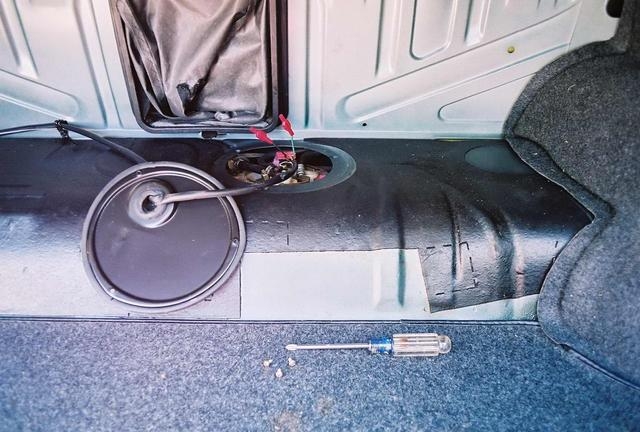
                              This photo shows the taps that I installed at the top of the fuel tank to measure voltages going to the fuel pump under different boost levels while driving:

                              RS2'd 93 UrS4 5 spd sedan
                              94 UrS4 V8 6 spd manual avant

                              Comment

                              • HMS-S6
                                S2Forum Extremist
                                • Jan 2010
                                • 1164
                                • Home: United Kingdom Current: England

                                #60
                                Originally posted by UrS4boy
                                Unless you are relayed I really doubt that you have anything close to 14V at wide open throttle based on previous research that I and another local Vancouver UrS-club member conducted. I quote:

                                "As provided by the factory, this pump receives power via a circuitous route: Power from the battery (under the rear seat) is fed forward to the central relay panel under the steering column. Turning the ignition on and starting the engine energizes relay No. 6 in that panel. This sends power from the relay via a green wire to Fuse No. 17, a 20 amp fuse, in the panel on the left end of the dash. From there power goes all the way back to the fuel pump in the trunk by the ski sack in a yellow striped green wire. Based on that route, the car started and 13.5 V or so at the battery, the voltage at the fuel pump is about 12.4 to 12.5 V, i.e. a loss of over one volt. This may not seem important but because the speed of the pump is related to the voltage, the fuel flow and pressure are also related to the voltage at the pump.

                                While testing the fuel pump voltage while driving (via a tee-connection, 6 ft of wire, the zippered hole in the ski sack, appropriate spade connectors and a digital multimeter), I noted that voltage to the pump dropped (e.g. to 12.2 V) while driving and specifically even more so (down to 11.82 V) under wide open throttle (WOT). Sean did some static testing of the fuel pressures under simulated boost (small compressor connected to the fuel pump regulator vacuum/boost port). He found that, with the engine off, at 11.75 volts (via a switched cable from the + post in the engine bay to the right side of Fuse 17), the boost/fuel pressures were as follows: 0/57,10/65,20/72, 28/80. However, since we are running RS2 turbos and injectors and a new OEM 4.0 Bar (58 psig) fuel pressure regulator, the software wants more from the fuel pump, e.g. 0/58,10/68, 20/78, 28/86. So, since we were potentially short by up to 6 psi of fuel pressure, it was clear that at least there was a possibility that the pinging we were experiencing under WOT was potentially related to low fuel pressures resulting from low voltage at the fuel pump.

                                To test this more, with the engine off, Sean connected his switched static power lead directly to the battery and tested the simulated boost-controlled fuel pressures again. This resulted in 12.4 V to the fuel pump and boost/fuel pressures of 0/57, 10/65, 20/75 and 28/83. The point is that at the higher simulated boost pressures (20 and 28 psig ), the increased voltage (from 11.75 to 12.4 V) yielded an increase 3 psi. Although this was still 3 psi short of the required 78 and 86 psig, respectively, it showed the potential that directly relaying the fuel pump to the battery would help us to "turbo charge" the fuel pump and get more flow and/or pressure. (NOTE: Dave F. talked to a technical rep at Bosch USA who said that low voltages are worse than higher voltages and that the fuel pump could handle up to 16 VDC so the regulated 13.5 V from an alternator should be "no problem")." (end quote)

                                REF: http://forums.quattroworld.com/s4s6/msgs/24327.phtml

                                This photo shows the taps that I installed at the top of the fuel tank to measure voltages going to the fuel pump under different boost levels while driving:

                                Thanks for the link but i did all this too, just last week

                                Comment

                                Working...